Silk Road: The Illusion of a Free Market in the Dark.
Beneath the visible surface of the Internet, which includes search engines, social media platforms, and news outlets, exists the extensive and largely unindexed deep web. Within this digital realm lies the dark web, an encrypted network accessible exclusively through specialised routing software such as Tor (The Onion Router). Developed by the United States Naval Research Laboratory to secure sensitive communications, Tor anonymises users by directing web traffic through a global network of relays. This system of anonymity has attracted individuals seeking to operate beyond the oversight of law enforcement and societal norms. As a result, the dark web has emerged as a digital frontier where absolute anonymity fosters illicit activities.
The launch of Silk Road on the dark web in February 2011 marked a pivotal moment in the evolution of illicit online marketplaces. Conceived by Ross William Ulbricht, a physics student, as an experiment in radical libertarianism and free-market economics, the platform implemented these ideologies by integrating Tor's anonymising capabilities with the digital currency Bitcoin. This combination enabled a scalable, eBay-style black market that included consumer reviews, escrow services, and postal delivery for prohibited goods. By lowering barriers and risks for both buyers and sellers, Silk Road served as a practical demonstration of how digital technologies could challenge traditional law enforcement and state oversight in illegal commerce. The platform's self-identification as a utopian free market underscores the tensions between individual autonomy, legal frameworks, and the potential normalisation of illicit economies.
This utopian vision quickly deteriorated as Silk Road expanded into a multimillion-dollar criminal enterprise. While initially focused on small-scale drug transactions, the marketplace soon facilitated over $1.2 billion in sales and attracted increasingly dangerous participants. Listings grew to include forged passports, stolen financial data, weapons, hacking tutorials, and contract killing services. Despite its user-friendly interface, the site experienced exit scams, cryptocurrency thefts, and extortion attempts targeting users' identities. In attempts to maintain authority, Ulbricht allegedly commissioned acts of violence against perceived threats to the platform. Thus, Silk Road, originally envisioned as an escape from state control, ultimately transformed into a digital cartel governed by authoritarian practices.
The emergence and eventual downfall of Silk Road challenged the belief that technology alone can establish a victimless society beyond legal oversight. The platform revealed critical vulnerabilities in unregulated commerce, where the pursuit of unrestricted liberty conflicted with human greed, paranoia, and self-interest. Analysis of Silk Road's encrypted infrastructure, ideological foundations, and practical outcomes provides valuable insights into the intersection of technology and human behaviour. This case prompts consideration of whether total anonymity, by eliminating social constraints, inevitably transforms a free market into a self-imposed prison.
The Vision of a Market Beyond State Control
Silk Road originated from a radical vision of establishing a parallel global economy beyond the reach of state authority. Launched in 2011, the platform was designed to guarantee complete anonymity and unrestricted exchange. The marketplace integrated two key technologies: Tor and Bitcoin. Developed by the United States Naval Research Laboratory, Tor routes internet communications through encrypted relays, concealing users' locations and IP addresses. Bitcoin, a decentralised peer-to-peer cryptocurrency, functions as an untraceable virtual currency, bypassing banks and regulated financial institutions. Combined, these technologies enabled a global market that facilitated an estimated $1.2 billion in illicit transactions.
Ross William Ulbricht, a physics and materials engineering student from Texas, developed this digital marketplace. Influenced by libertarian economic theories, Ulbricht aimed to create a platform that allowed consenting adults to conduct transactions with complete anonymity. His goal was to eliminate any digital trace that could attract law enforcement attention. Using the pseudonym "Dread Pirate Roberts" (DPR), Ulbricht maintained ultimate authority over buyers and vendors worldwide. The marketplace incorporated an eBay-style interface, user reviews, and an escrow system, transforming the traditionally violent drug trade into a more secure, community-oriented e-commerce environment.
Silk Road was not intended solely as a profitable criminal enterprise; it was deliberately positioned as a significant political, social, and philosophical movement. Ulbricht and the site's most dedicated participants adhered to radical libertarian and crypto-anarchist principles. This ideological foundation was shaped by the Austrian school of economics, drawing on the works of Ludwig von Mises and Murray Rothbard, as well as the agorist philosophy advanced by Samuel Edward Konkin III. Agorism posits that a truly free society can be achieved only through counter-economics, defined as peaceful black-market activities that directly oppose state taxation, oversight, and legal constraints. Ulbricht’s vision was further developed in the site's forums, where members engaged in extensive debates about philosophy, liberty, and the morality of a self-regulating market.
Ulbricht viewed his hidden marketplace as the ultimate technological manifestation of this defiant ideology. He famously declared his intention to create an "economic simulation to give people a first-hand experience of what it would be like to live in a world without the systemic use of force". In this crypto-anarchist utopia, the state's coercive authority was to be rendered entirely obsolete by the sheer efficiency of the free market. Official case materials and court documents reveal that Ulbricht deliberately built the site to enable users to conduct business wholly outside the bounds of traditional law, arguing that the trade of narcotics was a consensual, victimless act based on the fundamental libertarian ideal of absolute self-ownership. By substituting state-sponsored legal protections with an anonymous reputation system, user feedback, and cryptocurrency escrow accounts, Ulbricht believed he was actively building a superior, self-regulating society. For the Dread Pirate Roberts and his dedicated followers, the Silk Road was far more than a dark web drug bazaar; it was a triumphant libertarian experiment proving that the Internet could successfully host an energetic, autonomous economy liberated from the shackles of the state.
Constructing the First Dark Web Marketplace
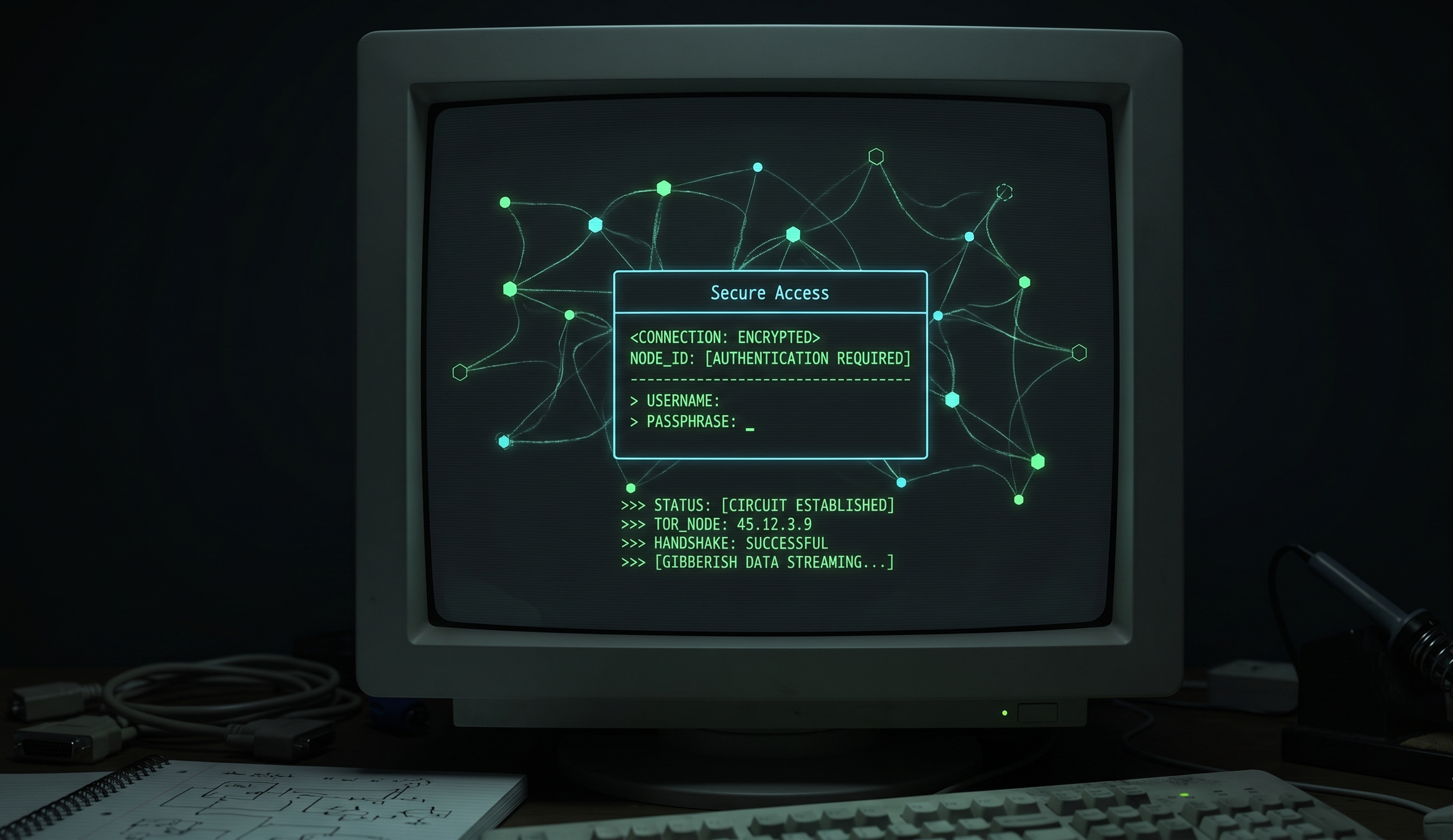
To convert a disorganised and hazardous illicit drug market into a streamlined, consumer-oriented enterprise, Silk Road employed a sophisticated integration of advanced technologies and established e-commerce frameworks. The site’s interface closely resembled mainstream retail platforms such as Amazon or eBay, allowing users to browse organised categories, add products to a virtual shopping cart, and complete purchases through a familiar checkout process. Beneath this conventional appearance, however, operated a complex and tightly regulated system designed for digital concealment.
The marketplace operated exclusively on the dark web and was accessible solely through the Tor (The Onion Router) network. Developed by the U.S. Naval Research Laboratory, Tor provided robust anonymity by routing user traffic through a global network of encrypted volunteer relays, effectively concealing the IP addresses of both buyers and the Silk Road server. As a result, the site could advertise illicit goods without revealing its physical location to law enforcement agencies. For financial transactions, the platform required Bitcoin, thereby avoiding reliance on traceable credit cards or traditional banking systems. Additionally, Silk Road implemented an internal 'tumbler' that processed payments through a series of complex, semi-random dummy transactions, significantly complicating authorities' efforts to link a buyer’s digital wallet to a specific vendor.
However, technological innovation alone could not address the central economic challenge of black markets: establishing trust among anonymous participants. To mitigate the risk of fraud, Silk Road implemented a rigorous automated escrow system. Upon purchase, the buyer’s Bitcoin was held in a centralised Silk Road escrow account rather than being transferred directly to the vendor. The funds were released to the seller only after the buyer confirmed receipt of the goods. In cases of dispute, such as non-delivery or substandard products, transactions were referred to a 'resolution centre' where Silk Road administrators served as neutral mediators to resolve conflicts and allocate funds accordingly. This system effectively reduced traditional risks associated with street-level transactions, such as theft and violence, by introducing a structured arbitration process.
The primary foundation of the Silk Road’s social structure was its reputation and rating system. Academic research on dark web marketplaces highlights that, in the absence of legal recourse, peer-to-peer reputation mechanisms are essential for reducing fraud and fostering trust. Scholars examining the Deep Web have observed that, due to the complete anonymity of buyers and sellers, feedback serves as a significant 'costly signal' of a vendor’s reliability. After completing a transaction, buyers were encouraged to rate the seller out of 5 stars and submit written feedback assessing product purity, delivery speed, and the seller’s packaging methods. Studies employing signalling theory indicate that while detailed product descriptions may function as manipulative 'cheap signals,' the use of escrow and a consistent record of high ratings serve as credible 'costly signals' that discourage opportunistic behaviour.
This structured feedback system established a pronounced status hierarchy within the marketplace. Vendors with high ratings prospered, developing strong digital brands that enabled them to command premium prices for their demonstrated reliability. In contrast, individuals engaging in fraudulent activities or selling substandard products were swiftly identified and excluded by the community. Reputation held such influence that vendors with elite status were permitted to require buyers to 'Finalise Early' (FE), thereby bypassing the escrow system based solely on their established track record. Empirical studies of Silk Road data reported a customer satisfaction rate approaching 98%, with the vast majority of feedback being positive.
The site’s discussion forums further supported this system by enabling a dedicated community to vet vendors, share harm-reduction strategies, and provide detailed reports on product quality. Through the integration of Tor’s anonymity, Bitcoin’s untraceability, escrow security, and the accountability provided by crowd-sourced reviews, Silk Road transformed the illicit drug trade. It replaced traditional stigmatised practices with an organised, consumer-oriented digital marketplace, fundamentally altering the dynamics of global illicit commerce.

Drugs, Rules, and the Morality of a Hidden Market
The Silk Road embodied a significant paradox: while fundamentally designed to subvert legal authority, it meticulously replicated the structures of law and order to ensure its survival. The United States Department of Justice unequivocally described the site as a “sprawling black-market bazaar” that facilitated the illicit distribution of hundreds of kilograms of illegal narcotics. It was, without question, a large-scale criminal syndicate. However, instead of devolving into chaos, the Silk Road established a highly organised internal ethic. This development was driven not by altruism, but by necessity. To survive and expand, illegal enterprises often imitate formal systems of order to create legitimacy, build customer trust, and maintain a consistent flow of capital.
Far from a free-for-all, the Silk Road was governed by a strict, codified morality. Site administrator Ross Ulbricht drafted a "Silk Road Charter" and extensive "Terms of Service" outlining fundamental values like "Self-Ownership," "Responsibility," and "Integrity". The site explicitly prohibited the sale of items designed to "harm or defraud," specifically banning child pornography, stolen credit cards, assassinations, and weapons of mass destruction. By framing the market around the libertarian concept of "victimless crimes," the platform attempted to seize the moral high ground, setting apart its supposedly peaceful vendors from the violent cartels of the physical world. However, this selected morality was also a calculated business strategy. Banning stolen financial data and firearms wasn't just ethical posturing; it was a pragmatic move designed to avoid attracting the disproportionate wrath of law enforcement that plagued other, less scrupulous dark web sites.
To enforce its ethical framework, the Silk Road established technocratic institutions that operated as a digital analogue of a state. Similar to historical pirates who implemented strict codes of conduct to maintain order and security, the Silk Road recognised the necessity of internal regulation for the sustainability of a criminal enterprise. In the absence of formal legal systems, the platform developed its own private bureaucracy. This included an automated escrow system for Bitcoin payments, a "resolution centre" for adjudicating shipment disputes, and a comprehensive "Seller's Guide" specifying requirements for stealth packaging. Ulbricht and his moderators exercised absolute authority, acting as judge, jury, and executioner, with the power to ban users and confiscate funds. The platform also imposed mandatory commissions on all transactions, effectively functioning as a private tax to support its administrative operations. In seeking to evade government regulation, the Silk Road inadvertently reconstructed the state in digital form.
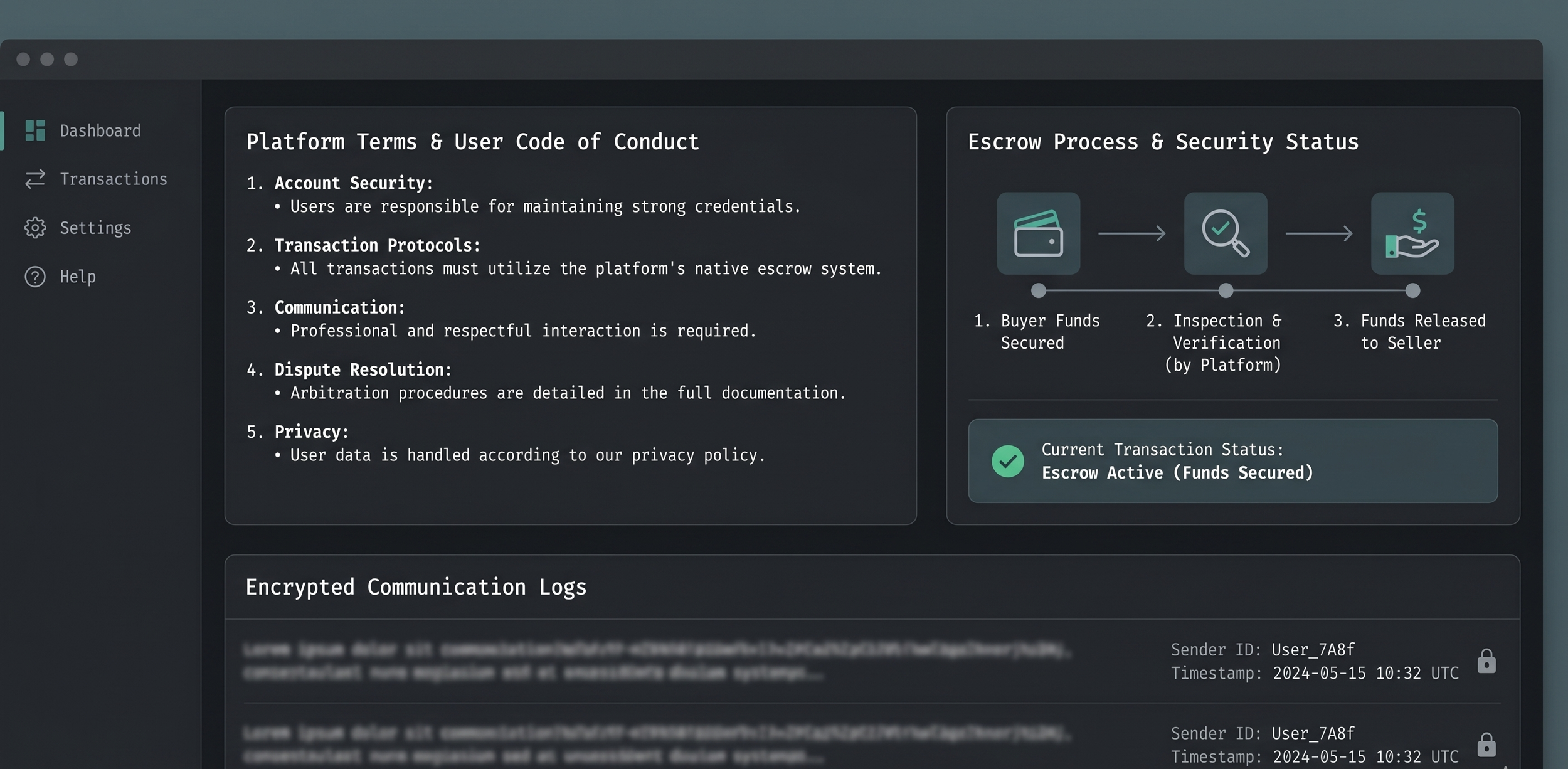
Academic research on dark markets demonstrates the necessity of rigid governance for site operation. In environments lacking regulatory oversight, the risk of opportunistic behaviour, exit scams, and fraud is substantial. Scholars highlight that peer-to-peer reputation systems functioned as the primary currency of the dark web. In the absence of legal recourse, buyers relied on what academics call "costly signals," such as a vendor's verifiable transaction history, consistently high ratings, and strict adherence to escrow protocols. These feedback mechanisms acted as robust self-enforcing systems, shifting the high-risk dynamics of street-level drug transactions toward a customer-oriented retail model. Studies indicate that reputation-based mechanisms effectively reduced violence and intimidation, establishing a digital status hierarchy where trust was commodified and rigorously monitored by the community.
The Silk Road's purported morality was ultimately a pragmatic illusion. The platform should not be idealised as a noble pursuit of liberty; rather, it operated as a highly profitable criminal enterprise, generating an estimated $80 million in commissions from illicit drug sales. However, its history provides a significant case study in organisational dynamics. The Silk Road illustrated that even within the most concealed and anonymous sectors of the Internet, complete anarchy undermines business operations. To sustain illicit activities, participants were required to implement the bureaucratic structures they ostensibly sought to avoid, thereby constructing a regulated framework to ensure stability.
The Myth of Invisibility
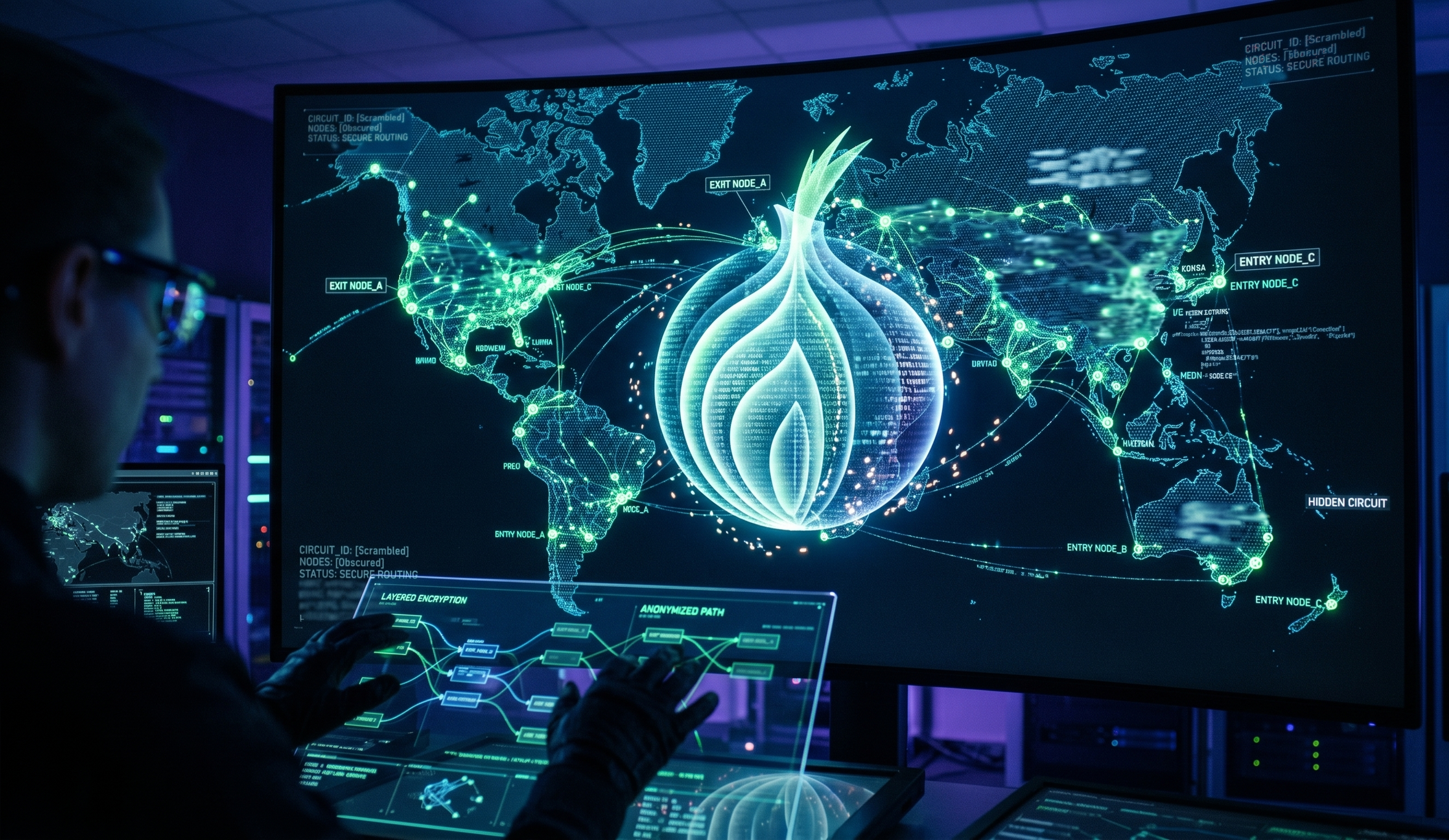
For nearly three years, the Silk Road operated not only as a lucrative black market but also as a powerful symbol of digital invisibility. Users and vendors truly believed that the technological triad of Tor, Bitcoin, and PGP encryption had rendered them entirely untouchable by global law enforcement. By bouncing web traffic through a decentralised network of volunteer relays, Tor successfully concealed the physical locations of both the site’s servers and its daily participants. Bitcoin, acting as an unregulated digital currency, severed the financial ties between buyer and seller, circumventing the surveillance of traditional banking systems. Meanwhile, PGP encryption scrambled sensitive delivery addresses and private messages into indecipherable blocks of text. Together, these sophisticated tools created a strong digital stronghold that convinced a massive community of outlaws and libertarians that they had successfully pushed the coercive power of the state to an impassable distance. In the site's vibrant discussion forums, members confidently reassured one another that the underlying cryptography was mathematically uncrackable, believing that only a catastrophic failure of human operational security could ever expose them.
The perception of perfect digital invisibility ultimately proved to be a myth. While the technology underpinning the Silk Road was highly advanced, the human operators and administrators remained susceptible to error. Law enforcement agencies recognized that penetrating the dark web did not require breaking encryption algorithms; instead, they could exploit human mistakes and the unavoidable connections between the darknet and the physical world. The downfall of the Dread Pirate Roberts’ operation began with significant errors made on the surface web. Early in the site's history, Ross Ulbricht, using the pseudonym "altoid," promoted Silk Road on public drug and cryptocurrency forums. In a critical lapse in operational security, he posted a job listing that requested responses to his personal email address, revealing his real name. Additionally, despite Ulbricht's confidence in his infrastructure, cyber investigators discovered vulnerabilities, including misconfigured software and server IP leaks, that enabled them to locate Silk Road's hidden servers overseas.
The myth of digital invisibility was definitively disproven on 1 October 2013 in the science fiction section of a San Francisco public library. Federal agents, who had been closely monitoring Ulbricht, understood that seizing his computer while encrypted would make the data inaccessible. According to FBI artefact records, undercover agents staged a distraction to allow another agent to seize Ulbricht’s open, unencrypted laptop. At that moment, Ulbricht was logged into the Silk Road’s master control panel as the Dread Pirate Roberts. The seized laptop provided substantial evidence, including thousands of pages of chat logs, detailed personal journals, and millions of dollars in cryptocurrency.
After Ulbricht's arrest, the Department of Justice and the FBI dismantled the Silk Road's infrastructure, replacing its marketplace interface with a seizure notice displaying federal law enforcement seals. This notice signalled to the criminal community that the site had been compromised. The DOJ announced the seizure of millions of dollars in Bitcoin belonging to Ulbricht, eliminating the illicit wealth he believed was beyond government reach. Following his conviction, the Manhattan U.S. Attorney stated that the takedown was intended to demonstrate to cybercriminals that the anonymity of the dark web does not guarantee protection from arrest and prosecution. The fall of Silk Road demonstrated that digital invisibility is ultimately an illusion, susceptible to law enforcement intervention.
The Investigation into Dread Pirate Roberts
Although Tor's encryption and Bitcoin's decentralised anonymity were robust, law enforcement succeeded in identifying Dread Pirate Roberts by systematically tracing operational errors rather than breaking cryptographic protections. In early 2011, an individual using the pseudonym "altoid" promoted Silk Road on both a magic mushroom forum and a public Bitcoin discussion board. Several months later, the same user posted a job listing seeking an IT expert with Bitcoin expertise, instructing applicants to respond to his personal email address. This oversight provided investigators with their first significant lead linking the online persona to a real-world identity.
Investigators quickly established connections between Ulbricht's surface web activity and his role as the operator of Silk Road. On Stack Overflow, a user registered as Ross Ulbricht posted a technical question regarding Tor hidden services and PHP code. After recognising the risk, he changed his username to "frosty" and updated his email address. FBI cyber forensic analysts later matched this code to the Silk Road server infrastructure and identified encryption keys associated with the "frosty" alias. Concurrently, the FBI cyber squad located Silk Road’s master server in Iceland by exploiting a misconfiguration, sometimes referred to as a "leaky CAPTCHA," which exposed the server's IP address. Data from this server, combined with records obtained from a Virtual Private Network (VPN) used by Ulbricht, traced administrative logins to an internet cafe on Laguna Street in San Francisco, near Ulbricht's residence. The link between physical and digital investigations was further established when Homeland Security and Customs and Border Protection intercepted a package of fake identification documents bearing Ulbricht's photograph, intended for use in renting additional servers.
The international investigation concluded on 1 October 2013 at the Glen Park Public Library in San Francisco. Agents understood that seizing Ulbricht's laptop while it was encrypted would render the data inaccessible, so it was essential to capture the device while he was logged in as Dread Pirate Roberts. Undercover Homeland Security agent Jared Der-Yeghiayan, using the compromised Silk Road administrator account "Cirrus," initiated a chat with DPR to prompt Ulbricht to access the site's backend. While Ulbricht worked in the science fiction section, two plainclothes agents staged a loud dispute behind him. As Ulbricht turned to observe the commotion, another agent seized the open, unencrypted Samsung 700Z laptop from his possession.
The seized laptop became the central piece of evidence in the government's case and was repeatedly cited by the FBI as critical to dismantling the operation. A three-hour on-site examination revealed that Ulbricht was logged into the Silk Road's "Mastermind" panel, which displayed real-time financial data, vendor activity, and site commissions. Forensic investigators recovered DPR's private PGP encryption key, millions of dollars in Bitcoin, and a comprehensive digital journal documenting the creation and management of the Silk Road. The laptop also contained thousands of pages of chat logs, including evidence of orders for multiple murders-for-hire. After a four-week trial, a Manhattan federal jury returned a verdict in just over three hours. In February 2015, the Department of Justice announced that Ross Ulbricht was found guilty on all seven counts of the indictment, including distributing narcotics via the Internet, computer hacking conspiracy, money laundering, and engaging in a continuing criminal enterprise. Ulbricht was sentenced to life in prison, with his operational failures and the seized hard drive ending his perceived invulnerability.
Legal Proceedings, Sentencing, and the Consequences of Conviction
The legal collapse of the Silk Road was as absolute and devastating as its rise was unprecedented. For nearly three years, the dark web marketplace had thrived on the intoxicating myth of digital invincibility—a steadfast belief among its users that the synthesis of Tor’s encryption and Bitcoin’s anonymity could permanently insulate a criminal enterprise from the reach of the state. That illusion was systematically dismantled over the course of a highly publicised four-week trial in Manhattan federal court in early 2015. Despite a defence strategy that attempted to portray Ross Ulbricht as a naive idealist who had allegedly relinquished control of the site to a successor, the prosecution presented an overwhelming mountain of digital evidence extracted directly from his seized laptop. After deliberating for merely three and a half hours, the jury delivered a sweeping and unambiguous verdict. Ross Ulbricht was found guilty on all seven felony counts, including narcotics trafficking, computer hacking conspiracy, money laundering, and engaging in a continuing criminal enterprise—a severe "kingpin" charge typically reserved for the leaders of violent, traditional cartels.
The sentencing hearing on 29 May 2015 marked the culmination of the legal proceedings, highlighting the significant human consequences associated with Ulbricht’s actions. In pursuit of leniency, Ulbricht requested that the court "leave a light at the end of the tunnel" and consider his advanced age. The defence contended that Silk Road had reduced violence and drug-related harm by shifting transactions from public spaces to a review-based digital platform. However, U.S. District Judge Katherine B. Forrest rejected this argument, characterising the harm-reduction claims as "fantasy." The court also heard victim impact statements from parents whose children had died from overdoses on drugs purchased through Silk Road. These accounts demonstrated that the platform had lowered barriers to obtaining highly addictive and lethal substances, thereby expanding the market rather than providing a safer alternative.
Additionally, the court considered evidence that Ulbricht had paid $650,000 in Bitcoin to arrange the murders of five individuals he perceived as threats to his criminal operations. Although there was no evidence that these murders were executed, as Ulbricht appeared to have been defrauded by those he hired, the judge emphasised that his willingness to order such actions demonstrated a disregard for human life. The proceedings revealed Ulbricht’s determination to protect his financial interests, undermining any ideological justification.

The sentence imposed on Ulbricht was intended to be both financially and personally devastating. He was ordered to forfeit over $183 million and received two concurrent life terms plus forty years, without the possibility of parole. This punishment was not solely a response to the crimes committed; it served as a deliberate general-deterrence message to the broader digital underworld. The Department of Justice regarded the Silk Road as a fundamental threat to the rule of law. Manhattan U.S. Attorney Preet Bharara stated that the conviction sent a clear warning to those considering operating online criminal enterprises: "The supposed anonymity of the dark web is not a protective shield from arrest and prosecution." Judge Forrest echoed this perspective, informing Ulbricht that his creation was "terribly destructive to our social fabric" and that the unprecedented sentence was necessary to demonstrate that "no one is above the law, no matter the education or the privileges." Through this case, the U.S. government asserted its authority, demonstrating that the reach of the state extends into the most concealed areas of cyberspace.
However, the legal narrative surrounding the Dread Pirate Roberts concluded with a significant development that altered his legacy. Over the following decade, a prominent movement led by libertarians, criminal justice reform advocates, and internet activists consistently argued that Ulbricht’s life sentence constituted a disproportionate response for a first-time, non-violent offender. This sustained campaign for clemency eventually reached the highest levels of political authority. In a notable reversal of the Department of Justice’s intended deterrent, Reuters and AP reported that President Donald Trump granted Ross Ulbricht a full and unconditional pardon in January 2025, vacating a sentence considered excessive. After serving nearly twelve years in federal prison, Ulbricht was released, leaving a complex and deeply polarised legacy concerning justice, technology, and the boundaries of state power.
The Impact of the Silk Road
The arrest of Ross Ulbricht and the subsequent dismantling of the Silk Road did not end the dark web drug trade; rather, it signalled its continued existence. By combining Tor's anonymising routing with Bitcoin’s decentralised payment system, Ulbricht inadvertently created an effective, open-source model for future global cybercrime. Scholarly research identifies the Silk Road as a foundational prototype for online underground marketplaces, often described as a "paradigm-shifting criminal innovation." Academics note that the platform addressed the primary challenge of anonymous trade: the lack of formal legal recourse. It demonstrated that reputation-based governance, including verifiable user feedback, transparent vendor ratings, and strict escrow services in place of state-backed contract enforcement, could foster consumer trust and support a large-scale, unregulated illicit economy.
The closure of the Silk Road led to the emergence of a resilient, "hydra-headed" phenomenon, in which the dismantling of one marketplace rapidly gave rise to multiple, more sophisticated successors. Following the FBI’s seizure of the original platform, numerous successor markets quickly sought to attract its lucrative user base. Platforms such as Silk Road 2.0, Agora, Dream Market, Evolution, and AlphaBay not only replicated the eBay-style interface but also significantly expanded their business models. AlphaBay, for example, grew to ten times the size of the original Silk Road, with over 400,000 listings, while the Russian-language Hydra market processed more than $5.2 billion in transactions before its own closure. The scale of these operations demonstrated that cryptomarkets had evolved from experimental libertarian projects into highly efficient, multi-billion-dollar components of the global criminal supply chain. As these cryptomarkets became established, vendors rapidly professionalised, continually improving operational security and utilising multiple platforms to mitigate risks associated with market closures or exit scams by administrators.
The emergence of the Silk Road compelled global law enforcement agencies to adapt and advance their investigative techniques. Prior to 2013, the anonymity provided by cryptocurrencies and the dark web posed significant challenges. The Silk Road investigation, however, accelerated the development of advanced blockchain forensic methods. Investigators discovered that Bitcoin's public ledger, once considered untraceable, actually creates a permanent, immutable record of transactions. The rise of specialised blockchain analytics firms, such as Chainalysis, equipped authorities with sophisticated tools to trace illicit funds globally, thereby undermining the perception of complete financial anonymity. Additionally, law enforcement shifted from traditional undercover operations to technical cyber infiltration strategies. Agencies employed Network Investigative Techniques (NITs) to deploy tracking software and conducted complex server seizures across international jurisdictions. In operations such as the takedown of the Hansa market, law enforcement covertly assumed control of the platform, using it as a honeypot to monitor unencrypted communications, passwords, and vendor shipping addresses in real time before shutting down the site.
The enduring financial legacy of the Silk Road was vividly illustrated more than a decade after its closure, underscoring the vast wealth it generated. In late 2021, federal agents raided the Georgia residence of James Zhong, a hacker who had exploited a vulnerability in the Silk Road’s withdrawal processing system in September 2012. By executing over 140 rapid withdrawals within seconds, Zhong siphoned approximately 50,000 Bitcoin from the marketplace’s internal reserves. The Department of Justice recovered the stolen cryptocurrency, which was concealed in an underground safe and on a single-board computer hidden in a popcorn tin, valued at $3.36 billion at the time of seizure. The 2022 forfeiture announcement underscored the Silk Road's significant impact. Ultimately, the enterprise established by Dread Pirate Roberts did not merely temporarily disrupt the illegal drug trade; it permanently established the intersection of advanced cryptography, decentralised finance, and global crime.

The Enduring Illusion of the Silk Road
The most significant legacy of the Silk Road was not the vast sums of untraceable currency it generated, nor the volume of illicit narcotics distributed through global postal systems. Its more enduring impact was psychological. Beyond serving as a platform for contraband sales, the Silk Road represented a large-scale experiment testing whether cryptographic code, digital anonymity, and radical libertarian ideology could establish a functioning, self-regulating underground order. Ulbricht’s vision directly challenged the foundations of the modern nation-state, seeking to demonstrate that individuals could prosper in a stateless market where technology, rather than government intervention, mediated trust and resolved disputes. This experiment was sustained by a compelling illusion: the belief that the mathematical certainty of encryption and the decentralised nature of cryptocurrency could override the unpredictable realities of human behaviour. The psychological appeal of this digital utopia was powerful for its participants. It promised a parallel society where the constraints of the physical world no longer applied, and where a community could be maintained solely through peer-to-peer reputation systems, robust PGP encryption, and anonymous escrow accounts. However, as the platform expanded into a large-scale criminal enterprise, this illusion began to deteriorate. It became evident that the market could persist only by adopting the same authoritarian structures it sought to avoid. To prevent disorder, Ulbricht assumed the role of a digital sovereign, exercising a "kill switch" and employing coercive measures to preserve the integrity of his stateless enterprise.
Even after the servers were seized, the Bitcoin confiscated, and the Dread Pirate Roberts sentenced to life in prison, the underlying fantasy of the Silk Road persisted. The dramatic legal and operational collapse of the site was interpreted by the dark web community not as a definitive rejection of the crypto-anarchist vision, but as a temporary obstacle—a technical flaw to be addressed with improved, more resilient code. This psychological impetus endured, convincing a generation of cybercriminals and digital libertarians that an untouchable, anonymous underground order was not only theoretically possible but also practically attainable.

Extensive academic and institutional research on darknet markets confirms that the psychological legacy of early cryptomarkets has directly influenced the evolution of cybercrime. Scholarly analyses identify the Silk Road as a foundational paradigm, demonstrating that subsequent cryptomarkets, including AlphaBay, Agora, and Evolution, inherited its core structures and operational assumptions. These successor markets adopted the eBay-style consumer interface, relied on user-driven reputation systems, and implemented automated escrow, indicating that Ulbricht's structural blueprint became a lasting feature of the digital underworld. Studies employing signalling theory highlight that, within these illegal markets, participants continue to depend on "costly signals" such as verified feedback and vendor seniority to establish social order, as pioneered by the Silk Road. Although individual platforms are volatile and frequently subject to exit scams or law enforcement interventions, the underlying psychological trust in the cryptomarket model remains robust.
Ultimately, the Silk Road demonstrated that while advanced technology can obscure physical identity and shield users from immediate state intervention, it cannot fundamentally alter human behaviour. Anonymous environments still require governance, trust, and order to function effectively. The enduring legacy of the Dread Pirate Roberts lies in the creation of an illusion so compelling that it persisted beyond the demise of his own platform. The infrastructure for an anonymous, unregulated world fostered a psychological desire to participate in such spaces, thereby altering the landscape of global crime and challenging traditional understandings of legal boundaries.
The Illusion Beneath Anonymity
The Silk Road was built upon a captivating and intoxicating fantasy: the promise of a digital fortress, forged by Tor and Bitcoin, existing entirely as a sovereign realm untethered from physical laws and state control. It offered a profound libertarian vision of a world beyond the state, an anarcho-capitalist utopia where mathematics and cryptography replaced police, courts, and borders. But the profound truth exposed by the rise and fall of Dread Pirate Roberts’ empire is that no system is ever purely technological. Code can scramble IP addresses and encrypt data, but it can never encrypt human nature. The dark web's impenetrable shield of anonymity merely masked the same primal forces that have always governed human societies: ideology, blind trust, and the intoxicating pull of ambition.
Despite its design as an automated, trustless market, the Silk Road ultimately depended on fragile human constructs. It relied on subjective trust established through peer-to-peer reputation systems, active community forums, and the authority of an administrator empowered to intervene. The platform's downfall was not solely due to law enforcement's technical capabilities, but rather to human error and the digital traces left behind. Incidents such as a careless forum post, the use of a real-name email address, and a misconfigured server in Iceland exposed vulnerabilities that undermined the perception of invincibility. Additionally, the anonymity that protected users also facilitated extortion, theft, and heightened paranoia. The ideal of a self-regulating, victimless marketplace was ultimately undermined by the realities of greed and criminality, leading to extreme measures allegedly taken by its founder to protect the platform.
The collapse of the Silk Road demonstrated that the perceived permanence of darknet markets is a significant vulnerability. The historical record is clear: in October 2013, federal authorities shut down the Silk Road, seized its servers, and posted a government seizure notice. After a trial in 2015, Ross Ulbricht was convicted on seven felony counts, including narcotics trafficking and money laundering, and received a life sentence. Nevertheless, the consequences of his actions persisted. The traceability of blockchain transactions ensured that the Silk Road's financial activities remained relevant for years. In late 2021, federal agents recovered over 50,000 Bitcoin, stolen from the Silk Road’s withdrawal system in 2012 and valued at $3.36 billion at the time of seizure, which had been hidden in a hacker's possession. This recovery underscored the enduring impact of the Silk Road and the misconception that its wealth was untraceable.
In conclusion, the Silk Road serves as a case study illustrating the persistent influence of human behaviour within technologically advanced environments. Its existence demonstrated that attempts to evade state authority through digital means often lead to the emergence of alternative forms of governance. While the deep web provided a high degree of anonymity, participants remained subject to ambition, betrayal, and the necessity of trust. Although law enforcement ultimately dismantled the Silk Road, its downfall was rooted in the reality that no system is entirely technological; human vulnerabilities persist regardless of technological advancements.

References
Aldridge, J., Decary-‐Hetu, D., University of Manchester, & University of Lausanne. (n.d.). Not an ‘eBay for drugs’: The cryptomarket “Silk Road” as a paradigm shifting criminal innovation. University of Manchester. https://gwern.net/doc/darknet-market/silk-road/1/2014-aldridge.pdf
Andrei, F., & Veltri, G. A. (2025). Signalling strategies and opportunistic behaviour: Insights from dark-net markets. PLoS ONE, 20(3), e0319794. https://doi.org/10.1371/journal.pone.0319794
Bilton, N. (2017). Silk Road - The Amazon of Drugs Part 1.
Bilton, N. & Penguin Audio. (n.d.). American Kingpin: The epic hunt for the criminal mastermind behind the Silk Road.
Brewster, T. (2015, April 16). There is no evidence Dark web drug sites like Silk Road help reduce violence. Forbes. https://www.forbes.com/sites/thomasbrewster/2015/01/30/silk-road-didnt-reduce-drug-crime/
Burt, C. (2024, May 20). Did the FBI Use Illegal Techniques to Find Silk Road Server? DataCenterKnowledge. https://www.datacenterknowledge.com/servers/did-the-fbi-use-illegal-techniques-to-find-silk-road-server-
Buxton, J., GDPO, Swansea University, Bingham, T., & GDPO, Swansea University. (2015). The rise and challenge of dark net drug markets. Policy Brief. https://www.swansea.ac.uk/media/The-Rise-and-Challenge-of-Dark-Net-Drug-Markets.pdf
Christin, N., CyLab, & Carnegie Mellon University. (2012). Traveling the Silk Road: A measurement analysis of a large anonymous online marketplace. In Carnegie Mellon INI/CyLab [Working paper](Original work published 2012)
Eileen Ormsby. (n.d.). About Silk Road.
ElBahrawy, A., Alessandretti, L., Rusnac, L., Goldsmith, D., Teytelboym, A., Chainalysis Inc, Technical University of Denmark, Department of Economics, University of Oxford, UCL Centre for Blockchain Technologies, University College London, The Alan Turing Institute, British Library, & Baronchelli, A. (2021). Collective dynamics of dark web marketplaces. UCL.
GDPO. (2013). GDPO situation analysis.
Ghappour, A. (2017). Searching places Unknown: Law enforcement jurisdiction on the dark web. Stanford Law Review, 69, 1075. https://repository.uclawsf.edu/faculty_scholarship/1583
Goanta, C. (2020). The private governance of identity on the Silk Road. Frontiers in Blockchain, 3. https://doi.org/10.3389/fbloc.2020.00004
Hardy, R. A., & Norgaard, J. R. (2015). Reputation in the Internet black market: an empirical and theoretical analysis of the Deep Web. Journal of Institutional Economics, 12(3), 515–539. https://doi.org/10.1017/s1744137415000454
Kerr, B. (2025, November 7). THE DREAD PIRATE ROBERTS. Open Source CEO by Bill Kerr. https://www.opensourceceo.com/p/dread-pirate-roberts
Khan, S. B. a. L., Kaneti, M., Guan, K. C., Sidaway, J. D., Yang, Y., & Winter, T. (2024). The Silk Road: Connecting Histories and FuturesThe Silk Road: Connecting Histories and FuturesTim Winter. New York, NY: Oxford University Press, 2022. 264 pp., illustrations. £64.99 cloth (ISBN 9780197605059); £18.99 paper/electronic (ISBN 978019760506). The AAG Review of Books, 12(3), 77–86. https://doi.org/10.1080/2325548x.2024.2350363
Lacson, W., & Jones, B. (2016). The 21St Century Darknet Market: Lessons from the fall of Silk Road. Zenodo (CERN European Organization for Nuclear Research), 10(1), 40. https://doi.org/10.5281/zenodo.58521
Lee, D. & BBC News. (2013). Silk Road: How FBI closed in on suspect Ross Ulbricht. In BBC News.
Manhattan U.S. attorney announces seizure of additional $28 million. (2015, May 18). https://www.justice.gov/usao-sdny/pr/manhattan-us-attorney-announces-seizure-additional-28-million-worth-bitcoins-belonging
ONLINE ‘UNDERGROUND’ MARKETPLACES FOR ILLICIT DRUGS: THE PROTOTYPE CASE OF THE DARK WEB WEBSITE ‘SILK ROAD.’ (2017). In Minnaar Acta Criminologica: Southern African Journal of Criminology (Vol. 30, Issue 1, pp. 23–24) [Journal-article].
Ormsby, E. (n.d.). Silk Road. In Silk Road.
Raeesi, R. (n.d.). The Silk Road, bitcoins and the global prohibition regime on the international trade in illicit drugs: Can this storm be weathered? JSTOR.
Raman, R., Nair, V. K., Nedungadi, P., Ray, I., Amrita School of Business, Amrita School of Computing, Department of Computer Science, Colorado State University, & Center for Cybersecurity Systems and Networks, Amrita Vishwa Vidyapeetham. (n.d.). Darkweb research: Past, present, and future trends and mapping to sustainable development goals. In Heliyon (Vol. 9, p. e22269).
Ramson, A. J. & CUNY Hostos Community College. (2020). Cybersecurity-The Silk Road market. In CUNY Academic Works. https://academicworks.cuny.edu/ho_oers/7
Ulbricht, R., & Vie, J. (2016). The Untold Story of Silk Road, Part 1. WIRED, 1–6. http://www.wired.com/2015/04/silk
Ulbricht, R. W., Jr. (2025). CYBER FORENSIC REPORT. In The United States Vs. Ross William Ulbricht (Silk Road Case) [Report].
UNITED STATES OF AMERICA, ULBRICHT, R. W., BHARARA, P., TURNER, S. A., HOWARD, T., DRATEL, J. L., LEWIS, L., HOROWITZ, J., & SOUTHERN DISTRICT REPORTERS, P.C. (n.d.). F1LDULB1 Trial. In K. B. FORREST, UNITED STATES DISTRICT COURT SOUTHERN DISTRICT OF NEW YORK.
U.S. attorney announces historic $3.36 billion cryptocurrency seizure. (2022, November 7). https://www.justice.gov/usao-sdny/pr/us-attorney-announces-historic-336-billion-cryptocurrency-seizure-and-conviction
Wang, Y., Arief, B., & Hernandez-Castro, J. (2024). Analysis of security mechanisms of dark web markets. JSTOR, 120–127. https://doi.org/10.1145/3655693.3655700
Wright, A. J. (2022). The dark web: the unseen side of the internet.
Yang, M., Luo, J., Zhang, L., Wang, X., & Fu, X. (2012). How to block Tor’s hidden bridges: detecting methods and countermeasures. The Journal of Supercomputing, 66(3), 1285–1305. https://doi.org/10.1007/s11227-012-0788-4
Zwitter, A., & Gstrein, O. J. (Eds.). (2021). Identity and Privacy governance. In Frontiers in Blockchain. https://doi.org/10.3389/978-2-88971-413-1