Every file. EVERY LEDGER.
Geopolitics & History
Civil wars are usually described as internal struggles: citizens against governments, rival factions competing for power, and institutions collapsing under domestic pressure. But many such conflicts soon attract foreign governments, intelligence services, arms suppliers, neighbouring states and commercial networks with interests of their own.
Profits of Destabilisation examines how political funding becomes covert interference, how influence turns into armed support, and how internal conflict develops into proxy warfare. From NGOs, intermediaries and hidden financial networks to weapons, resource deals and profitable war economies, the article asks a darker question: when instability begins rewarding powerful outsiders, who still has an interest in allowing it to end?
In geopolitics, betrayal is rarely judged by principle alone. The same act that one government calls treason, another treats as intelligence, opportunity, or proof of ideological superiority. This article traces the darker politics of espionage, defection, and asylum: why people betray states, why governments protect them, how defectors become strategic assets, and why the line between traitor and hero is almost always drawn by whoever gains the secret.
Alliances are often presented as symbols of trust and unity, but history suggests something far less stable. Most are built on fear, strategic necessity, unequal dependence, and temporary alignment rather than lasting loyalty. From early pacts and wartime coalitions to Cold War blocs and modern partnerships, this article examines how alliances form, why they endure, where they fracture, and what their instability reveals about the deeper structure of power.
Coups are often treated as sudden ruptures, but they rarely emerge from nowhere. They are built on weak institutions, elite fear, fractured militaries, and the quiet erosion of legitimacy long before power changes hands. This article examines what a coup really is, why governments are overthrown, how coups function in practice, why many fail, and what they reveal about the hidden fragility beneath the state.
The Cold War is often treated as history — a closed chapter that ended with the fall of the Soviet Union. But its real legacy never disappeared. It survived in alliances, nuclear doctrine, proxy habits, intelligence structures, and the psychology of permanent suspicion. This article explores how the Cold War did not truly end, but instead settled into the foundations of the modern world, where its shadow still shapes power, fear, and global order.
The modern world feels open — connected by trade, technology, and movement. But beneath that illusion lies a fragile reality. Global systems depend on narrow routes, strategic passages, and unseen constraints. These chokepoints, often overlooked, are where true power resides — and where the world can be brought to a halt.
Power in the modern world is no longer exercised only through armies and battlefields. Increasingly, it flows through financial systems, trade networks, and the institutions that govern global markets. From the dominance of the U.S. dollar to the influence of international banking systems and sanctions regimes, economics has become one of the most powerful instruments of geopolitical strategy. In this quiet arena of competition, nations shape global influence not with weapons, but with markets, currencies, and the architecture of the global economy.
World War II officially ended in 1945, but its consequences never truly disappeared. The alliances it forged, the borders it redrew, and the institutions it created still shape global politics today. From nuclear deterrence and military alliances to unresolved territorial disputes and national memories of victory and defeat, the war continues to cast a long shadow over modern geopolitics. Understanding the world today means understanding the war that quietly built it.
From covert assassinations to silent intelligence operations, states have long exercised power in the shadows. This article explores how espionage and targeted killing shape modern geopolitics beyond public scrutiny.
Behind global drug markets lies a hidden system of power linking cartels, states, and financial networks. This article explores how illicit trade shapes politics, conflict, and influence across continents.
Nuclear weapons were built for destruction, yet their greatest power lies in preventing war. This article explores the paradox of deterrence and how the bomb reshaped global strategy and fear.
Modern conflicts are no longer fought only on battlefields. This article explores how cyber warfare has become a silent tool of state power—shaping conflicts without a single shot being fired.
Modern wars rarely end with clear victories anymore. This article explores why conflicts today resist endings and how global politics, strategy, and power keep wars lingering far longer than expected.
Historical crime
In the early morning of 9 August 1969, four members of a Los Angeles cult called the Family entered 10050 Cielo Drive. The actress Sharon Tate, eight and a half months pregnant, and four others were murdered. The next night, the LaBiancas. The man behind it, Charles Manson, never personally killed anyone on either night. The trial that followed redefined American prosecutorial doctrine on conspiracy and influence — and is widely held to have ended the 1960s.
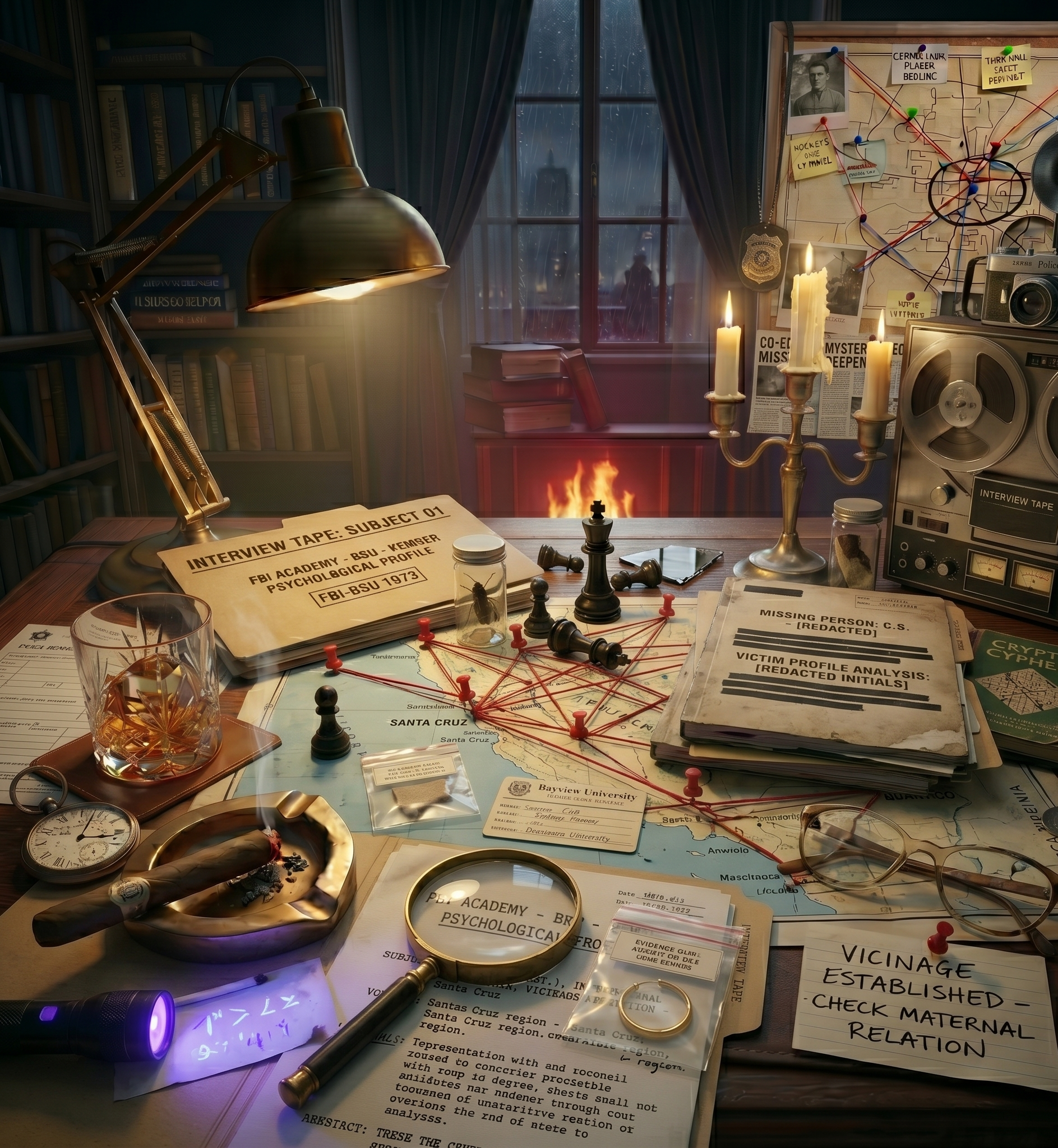
Edmund Kemper III was 6 feet 9 inches, with an IQ in the 140s, and by the time he walked into a phone booth in 1973 to confess, he had killed ten people, including his own mother. What followed was unprecedented. Special Agent Robert Ressler of the FBI's Behavioural Science Unit interviewed Kemper repeatedly. The transcripts from those Vacaville sessions became the bedrock on which modern offender profiling was built.
Richard Chase is often remembered only for the horror of his crimes. But the deeper story is more unsettling. Long before the violence, there were signs of collapse: paranoia, bodily delusion, withdrawal, and a mind drifting further from reality. This article looks at the Richard Chase case not as spectacle, but as a disturbing study in untreated breakdown, missed warning signs, legal responsibility, and the point at which private collapse becomes public catastrophe.
Jack the Ripper remains one of history’s most infamous criminal mysteries. In the autumn of 1888, a series of murders in Whitechapel turned London’s East End into a place of terror, rumour, and relentless suspicion. The killer was never identified, but the case grew far beyond the crimes themselves — into a story of urban fear, media frenzy, failed investigation, and a darkness that history never fully contained.
The Julia Wallace murder is one of Britain’s most unsettling historical crimes. A quiet Liverpool couple, a mysterious phone call, a nonexistent address, and a husband convicted, sentenced to die, then freed on appeal. Nearly a century later, the case still refuses to settle into certainty. This is not just a murder story, but a study in timing, silence, and the unsettling possibility that truth can remain permanently out of reach.
In 1918, New Orleans was a city alive with music, light, and movement. But beneath that energy, something darker began to take hold. Homes were broken into in the dead of night, and victims were attacked with axes taken from their own homes. There was no clear pattern, no obvious motive — only fear. Then, the killer did something no one expected. He wrote to the city. And what followed was one of the strangest nights in American history.
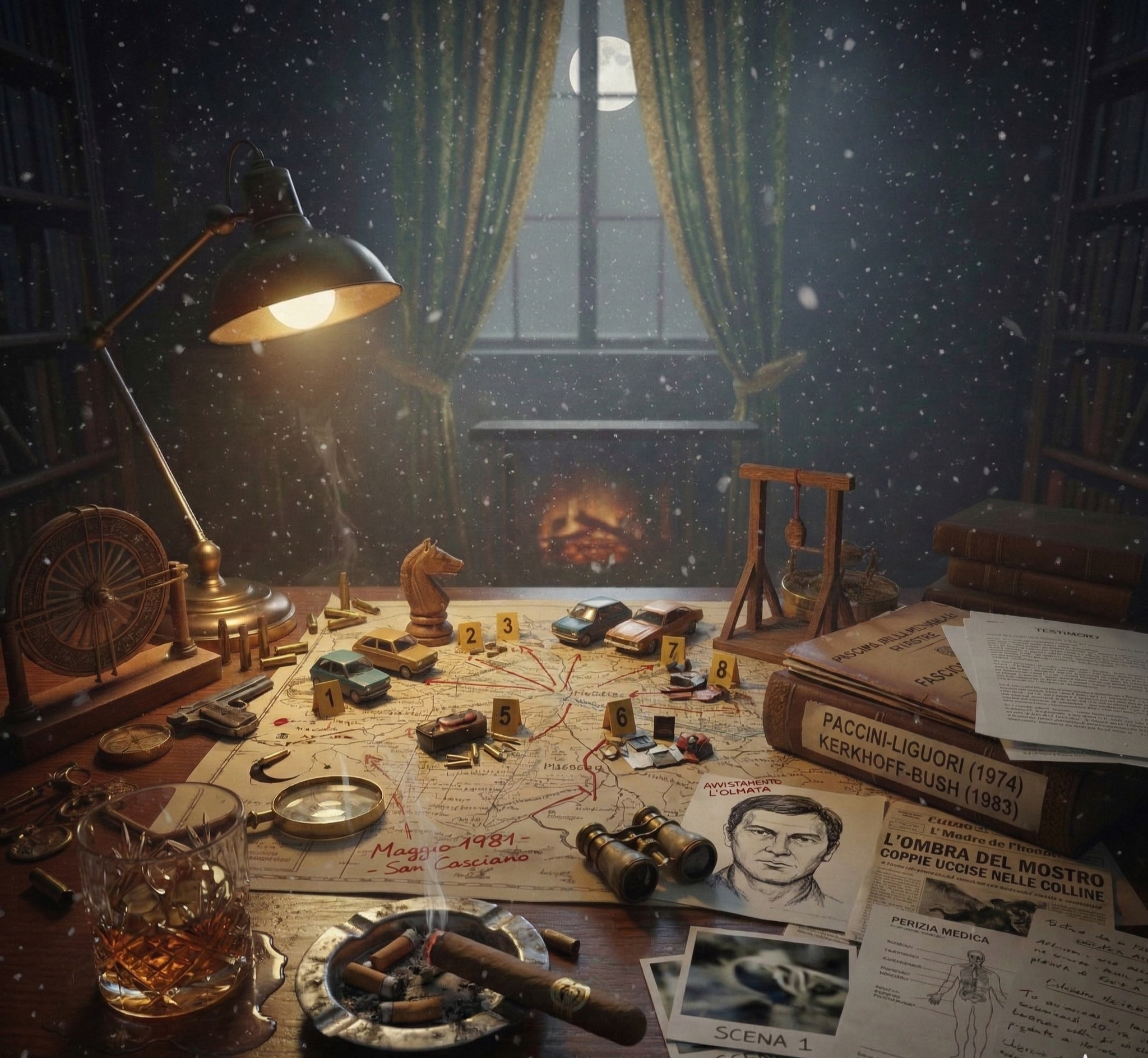
Between 1968 and 1985, couples parked in the quiet countryside around Florence became the targets of a mysterious killer who struck with chilling precision. Armed with a Beretta pistol, the murderer attacked lovers in secluded areas of Tuscany, leaving behind a trail of fear that would terrorise Italy for nearly two decades. Known as the Monster of Florence, the killer was never definitively identified, and the investigation that followed became one of the most controversial in European criminal history.
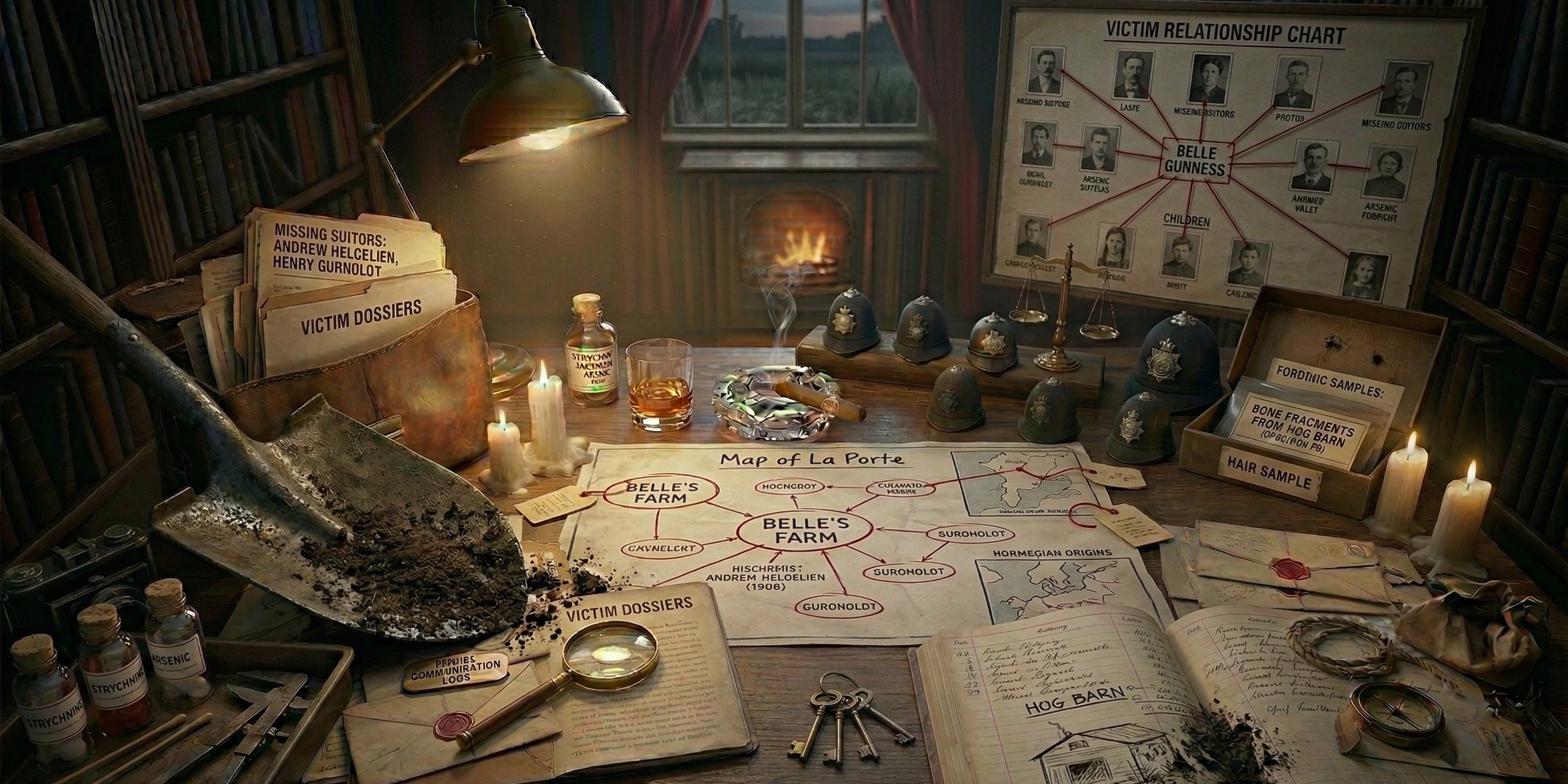
In the early 1900s, a quiet farm in La Porte, Indiana became the center of one of America’s most disturbing criminal mysteries. Belle Gunness, later known as “Lady Bluebeard,” was suspected of luring wealthy suitors through newspaper advertisements—only for them to disappear without a trace. When her farmhouse burned in 1908, investigators uncovered buried remains beneath the property, raising a chilling question: did Belle die in the fire, or did she escape after building a fortune from deception and death?
In the late 1970s, a criminal trial introduced the courtroom to a rare and controversial psychological condition. The case of Billy Milligan forced society to confront the uneasy intersection of crime, identity, and mental illness.
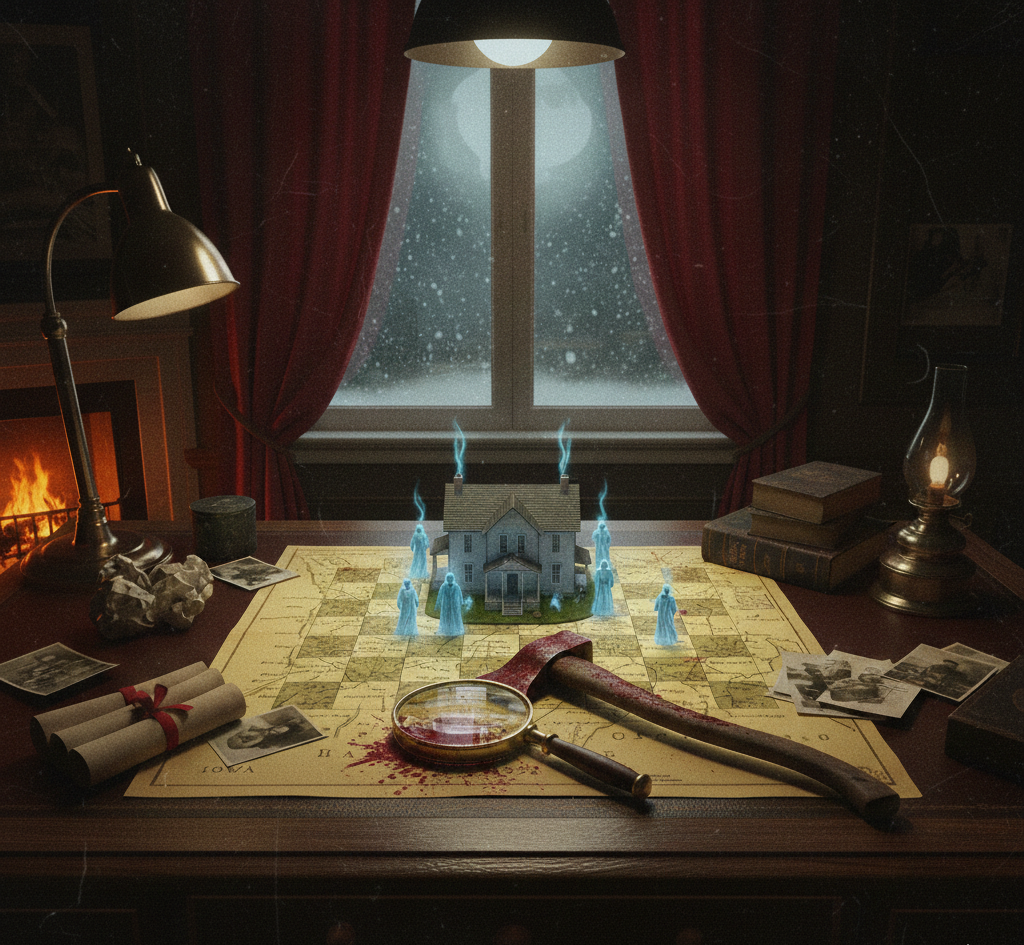
In 1912, a quiet Iowa town woke to one of the most brutal crimes in American history. Eight people were murdered in their sleep, and the identity of the killer has never been proven.
In 1692, fear and accusation consumed a small New England town. The Salem witch trials reveal how panic, belief, and authority combined to turn suspicion into deadly justice.
In early modern Europe, fear of the supernatural blurred the line between crime and belief. The werewolf trials reveal how panic, superstition, and authority combined to create one of history’s most unsettling chapters.
Unsolved Mysteries
Iran-Contra is usually remembered as a scandal. It lingers more like an unresolved political mystery. A plane fell from the sky, covert networks came into view, and investigations exposed enough to confirm that something profound had been hidden. Yet the deeper questions never fully settled: who truly authorized what, how far the knowledge went, where all the money moved, and why the constitutional system stopped short of a complete reckoning.
In June 1982, Roberto Calvi — chairman of Banco Ambrosiano and known as “God’s banker” for his Vatican ties — was found hanging beneath Blackfriars Bridge in London, with bricks in his pockets and cash in multiple currencies. What followed was not a simple murder investigation, but a descent into a world of offshore finance, Masonic links, institutional silence, and failed prosecutions. This article traces the death, the network around Calvi, and the deeper mystery of what kind of financial structure may have needed him gone.
Silk Road was more than a dark web marketplace. It was an attempt to build a hidden economy beyond the reach of the state, powered by anonymity, Bitcoin, and libertarian belief. For a time, it worked. Then came the investigation, the arrest of Ross Ulbricht, and the collapse of the illusion that digital invisibility could become a permanent form of freedom. This is the story of how the internet’s first great underground market rose, ruled, and fell.
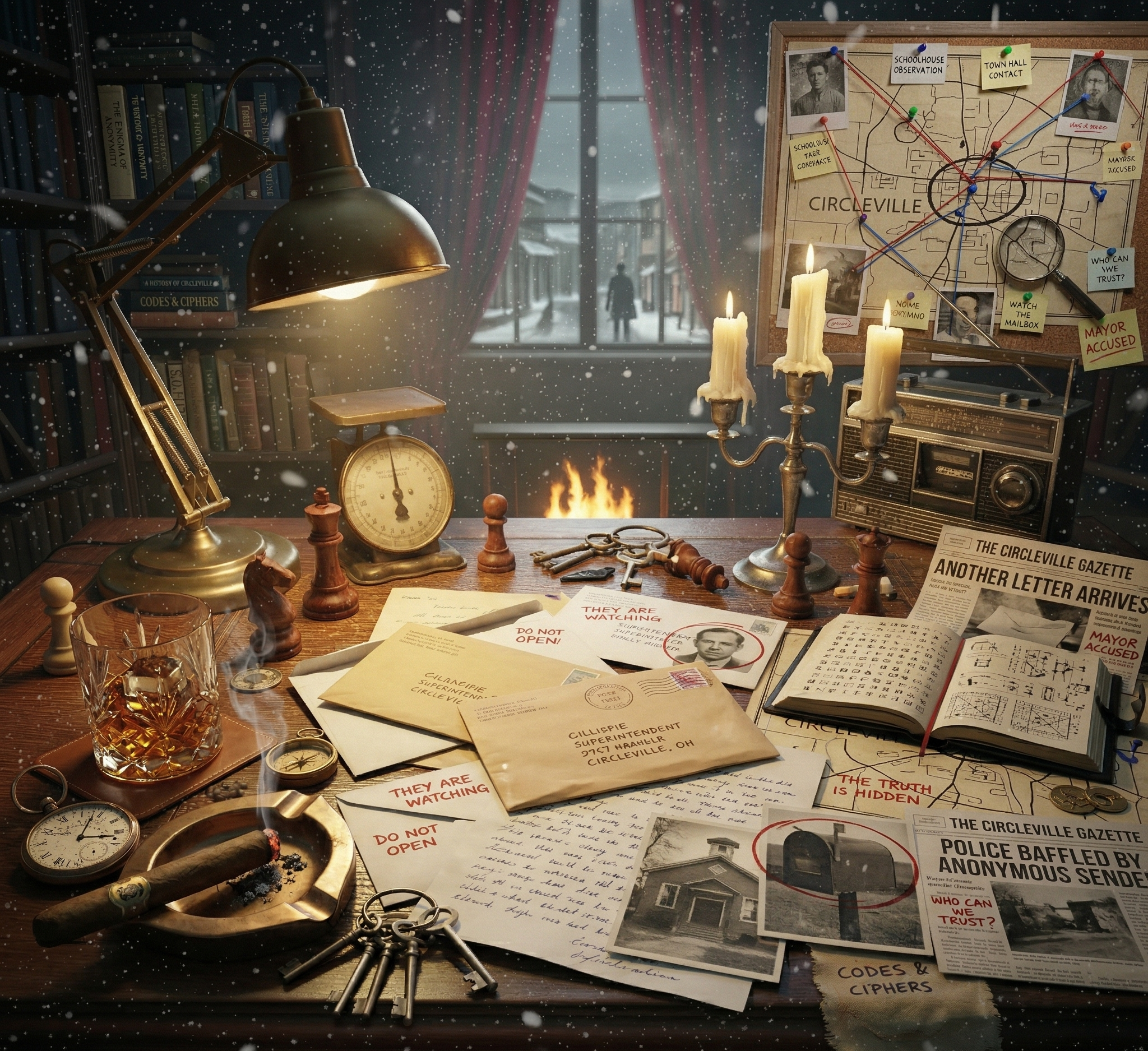
The Circleville Letters remain one of America’s strangest unsolved mysteries. What began as anonymous accusations in a quiet Ohio town grew into years of fear, public humiliation, a suspicious death, and an attempted murder. Even after a conviction, the letters reportedly continued — leaving behind a mystery defined not just by secrecy, but by the unsettling feeling that someone always seemed to be watching.
The Princes in the Tower remain one of history’s most haunting royal mysteries. In the summer of 1483, Edward V and his younger brother were placed in the Tower of London during a bitter succession struggle. They were seen less and less, until they were not seen at all. Were they murdered, hidden, or transformed into a political legend by those who came after? This article examines the silence, suspicion, and power behind one of England’s darkest unanswered questions.
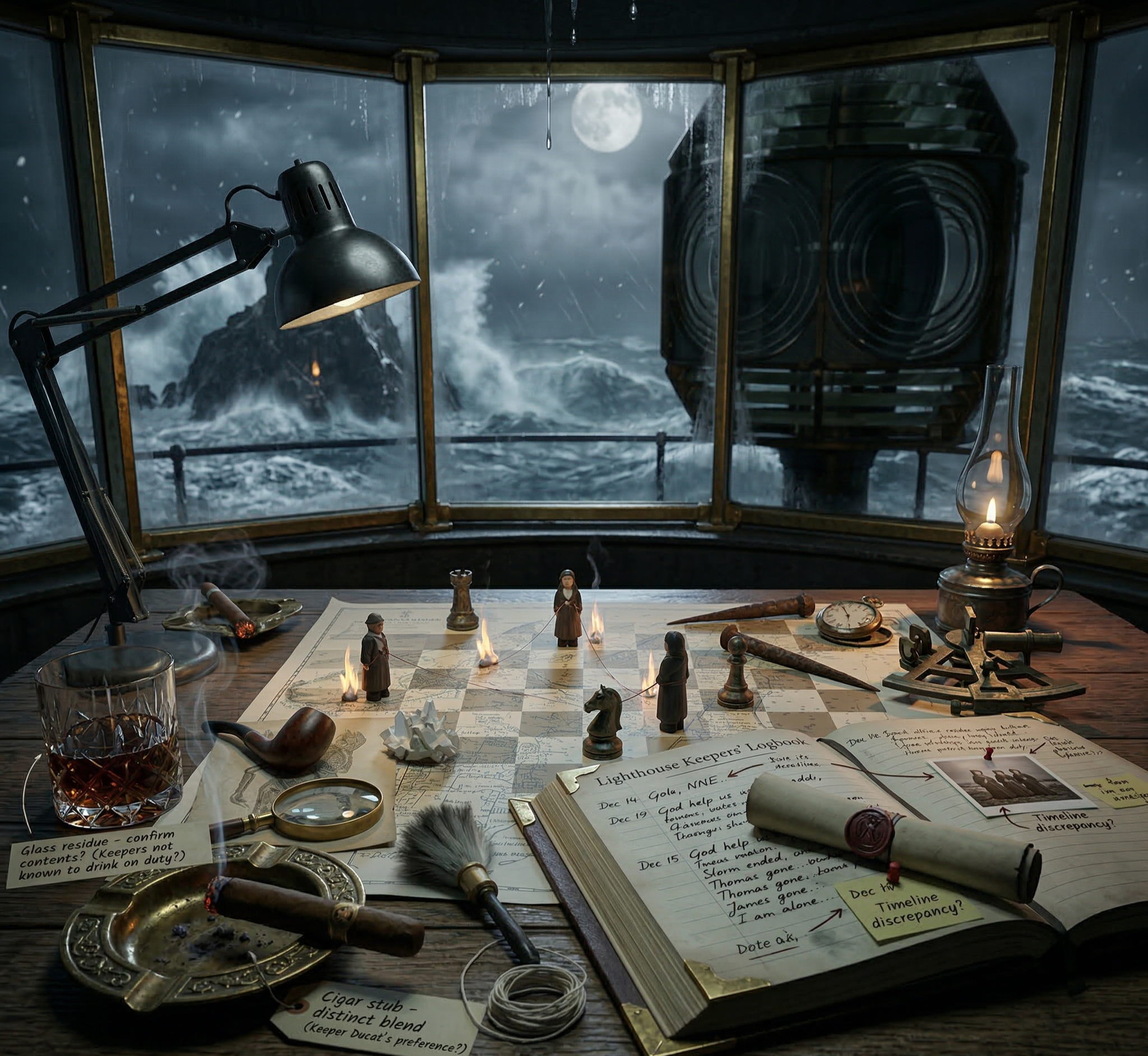
In December 1900, the lighthouse on Eilean Mòr continued to shine across the Atlantic, guiding ships safely through dangerous waters. But when the relief vessel finally arrived, the keepers responsible for that light had vanished. Inside the lighthouse, the clocks had stopped, coats were missing, and the logbook ended abruptly. More than a century later, the disappearance of the Flannan Isles keepers remains one of the sea’s most haunting mysteries.
In 1948, a well-dressed man was found dead on Somerton Beach in Australia with no identification and no clear cause of death. Hidden in his clothing was a cryptic note reading “Tamám Shud” and a mysterious coded message that investigators could never fully decipher. Decades later, the identity of the Somerton Man still raises unsettling questions about espionage, secrecy, and a mystery that refused to end.
The Mary Celeste was discovered drifting in the Atlantic Ocean in 1872—its cargo untouched, its supplies intact, yet its entire crew had vanished. What followed became one of maritime history’s most enduring and unsettling mysteries.
Medical progress has saved countless lives, yet history also records moments of profound ethical failure. This article examines cases where pharmaceutical ambition, oversight gaps, and power led to unintended human cost.
Hidden behind Cold War secrecy, the MK-Ultra program pushed the boundaries of psychological experimentation. This article examines how fear, power, and secrecy allowed one of the most controversial intelligence projects to unfold.
In 1922, six members of a German farm family were brutally killed—yet the killer was never found. Strange footprints, hidden watchers, and a silent farmhouse turned Hinterkaifeck into one of history’s most chilling unsolved crimes.
Nine hikers entered the Ural Mountains in 1959 and never returned. What investigators found at Dyatlov Pass still defies explanation—leaving behind one of the most haunting mysteries in modern history.